YOKOGAWA ALE111-S51: A Comprehensive Guide to the Ethernet Communication Module
Whether you’re an engineer looking to integrate this module into your control system, a procurement specialist seeking detailed specifications, or simply someone interested in the latest in industrial communication technology, this guide has something for you. Let’s dive into the world of the YOKOGAWA ALE111-S51 and discover how it can enhance your industrial operations.
Technical Parameters of YOKOGAWA ALE111-S51
Understanding the technical specifications of the ALE111-S51 is crucial for assessing its suitability for specific applications. Below, we break down each parameter to provide a clearer picture of what this module offers:
Physical Layer Interface: IEEE802.3 10BASE-T
The ALE111-S51 utilizes the IEEE802.3 10BASE-T standard for its physical layer interface. This standard is widely adopted in Ethernet networks, ensuring compatibility with a broad range of devices and systems. The 10BASE-T specification supports data transmission at 10 Mbps, which is sufficient for most industrial communication needs.
Connection Method: Point-to-Point
The module employs a point-to-point connection method, meaning it establishes a direct link between two devices. This setup is ideal for scenarios where a dedicated communication channel is required, minimizing interference and ensuring data integrity.
Connector: RJ-45
Equipped with an RJ-45 connector, the ALE111-S51 uses the standard Ethernet port found on most networking equipment. This commonality simplifies the integration process, as it allows for the use of standard Ethernet cables and reduces the need for specialized connectors.
Transmission Method: Half-Duplex
The transmission method is half-duplex, which means data can be sent and received, but not simultaneously. While full-duplex communication is faster, half-duplex is often sufficient for many industrial applications where real-time data exchange is not critical.
Communication Functions: Modbus and DNP3 Protocols
One of the standout features of the ALE111-S51 is its support for Modbus and DNP3 communication protocols. Modbus is a widely used protocol in industrial automation for connecting different devices, while DNP3 is particularly popular in the utilities sector for its robustness and security features. This dual support makes the module versatile and adaptable to various industry requirements.
These technical parameters collectively make the ALE111-S51 a powerful tool for industrial communication, offering reliability, compatibility, and flexibility.
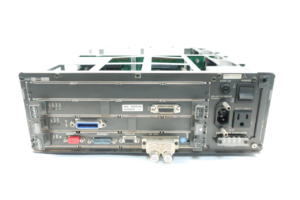
Industry Applications of YOKOGAWA ALE111-S51
The ALE111-S51’s design and capabilities make it an excellent fit for a variety of industrial settings. Below, we explore some of the key industries and applications where this module shines:
Process Control Systems
In process control systems, the ALE111-S51 plays a vital role in facilitating communication between safety control units and programmable logic controllers (PLCs). For instance, in a chemical processing plant, the module can be used to transmit critical data from safety sensors to the control system, ensuring that any anomalies are quickly detected and addressed.
Manufacturing Facilities
Manufacturing environments often require the integration of numerous safety-critical devices, such as emergency stop buttons, light curtains, and safety interlocks. The ALE111-S51 enables seamless data exchange between these devices and the central control system, enhancing overall safety and operational efficiency. A practical example is in automotive assembly lines, where the module can help coordinate the operation of robotic arms and conveyor systems.
Power Generation Plants
Power generation facilities, whether they are nuclear, coal-fired, or renewable energy plants, rely heavily on robust communication systems to monitor and control various processes. The ALE111-S51 ensures reliable communication between safety control units and safety-related equipment, such as turbine governors or reactor control systems. This reliability is crucial for maintaining safe and efficient power production.
Beyond these primary applications, the ALE111-S51 can also be found in other sectors such as oil and gas, water treatment, and pharmaceuticals, where reliable communication is essential for process integrity and safety.
Related Models and Their Parameters
Yokogawa’s range of Ethernet Communication Modules includes several models that cater to different needs and specifications. Understanding these related models can help users choose the most appropriate module for their specific applications. Below, we examine three related models: ALE111-S50, ALE111-S53, and ALE111-S01.
ALE111-S50
The ALE111-S50 is similar to the ALE111-S51 in many respects but may differ in certain features or compatibility. Its key parameters include:
- Physical Layer Interface: IEEE802.3 10BASE-T
- Connection Method: Point-to-point
- Connector: RJ-45
- Transmission Method: Half-duplex
- Communication Functions: Supports Modbus and DNP3 protocols
While the ALE111-S50 shares the same basic specifications as the ALE111-S51, it might be tailored for specific system configurations or older versions of Yokogawa’s control systems.
ALE111-S53
The ALE111-S53 is another variant in the series, offering similar functionality with potential enhancements or differences in design. Its specifications are:
- Physical Layer Interface: IEEE802.3 10BASE-T
- Connection Method: Point-to-point
- Connector: RJ-45
- Transmission Method: Half-duplex
- Communication Functions: Supports Modbus and DNP3 protocols
This model might include additional features such as improved data transfer rates or enhanced security measures, making it suitable for more demanding applications.
ALE111-S01
The ALE111-S01 is designed for specific use cases, possibly with unique features or compatibility requirements. Its key parameters are:
- Physical Layer Interface: IEEE802.3 10BASE-T
- Connection Method: Point-to-point
- Connector: RJ-45
- Transmission Method: Half-duplex
- Communication Functions: Supports Modbus and DNP3 protocols
Users should consult the specific documentation for the ALE111-S01 to understand how it differs from the ALE111-S51 and whether it meets their operational needs.
For a comprehensive comparison of these models and to explore purchasing options, visit our products page.
Installation and Setup
Installing the YOKOGAWA ALE111-S51 is straightforward, thanks to its compact design and user-friendly interface. Here are the general steps for installation:
- Ensure the power to the system is turned off.
- Locate the appropriate slot in the control station or node unit.
- Insert the ALE111-S51 module into the slot, ensuring it is securely seated.
- Connect the Ethernet cable to the RJ-45 connector.
- Power on the system and configure the communication settings as per the system requirements.
For detailed installation instructions, refer to the official Yokogawa documentation or contact our support team via our website.
Maintenance and Troubleshooting
Regular maintenance of the ALE111-S51 ensures optimal performance and longevity. Here are some maintenance tips:
- Periodically check the Ethernet connections for any signs of wear or damage.
- Ensure the module is free from dust and debris.
- Monitor the communication logs for any errors or anomalies.
In case of issues, common troubleshooting steps include:
- Verifying the Ethernet cable connections.
- Checking the configuration settings for correctness.
- Restarting the module or the entire system.
For persistent issues, consult the user manual or seek assistance from Yokogawa’s technical support.
Benefits of Using YOKOGAWA ALE111-S51
The ALE111-S51 offers several benefits that make it a preferred choice for industrial communication:
- Reliability: Built to withstand harsh industrial environments, ensuring consistent performance.
- Efficiency: Facilitates fast and secure data transmission, reducing downtime and improving productivity.
- Compatibility: Seamlessly integrates with various Yokogawa control systems and subsystems.
- Scalability: Supports the expansion of industrial networks, accommodating growing operational needs.
These advantages underscore the module’s role in enhancing the overall efficiency and safety of industrial operations.
The Evolution of Ethernet Communication Modules in Industrial Automation
The adoption of Ethernet in industrial settings has revolutionized the way systems communicate, offering higher speeds, greater reliability, and easier integration compared to traditional fieldbus systems. The YOKOGAWA ALE111-S51 is a product of this evolution, embodying the latest advancements in industrial communication technology.
Historically, industrial communication relied on proprietary protocols and dedicated wiring, which often led to compatibility issues and high maintenance costs. The shift to Ethernet-based communication, as seen with modules like the ALE111-S51, has addressed these challenges by providing a standardized, flexible, and cost-effective solution.
Today, Ethernet communication modules are integral to the implementation of Industrial Internet of Things (IIoT) initiatives, enabling real-time data collection, remote monitoring, and predictive maintenance. The ALE111-S51, with its support for widely used protocols like Modbus and DNP3, is well-positioned to support these modern industrial trends.
For more insights into the history and future of industrial communication, check out this external resource.
Conclusion
The YOKOGAWA ALE111-S51 Ethernet Communication Module is more than just a component; it’s a gateway to enhanced industrial automation. Its robust technical parameters, wide range of industry applications, and compatibility with related models make it a versatile and reliable choice for any industrial setting.
Whether you’re looking to upgrade your current system, integrate new technologies, or simply learn more about the capabilities of modern communication modules, the ALE111-S51 offers a wealth of opportunities. We invite you to explore our products page for more information on this module and other Yokogawa offerings.
Additionally, for those interested in staying updated on the latest trends and developments in industrial automation, consider subscribing to our newsletter or following us on social media. Your journey towards optimized industrial operations starts here.

Leave a comment
Your email address will not be published. Required fields are marked *